
Sanding, Salting and Ice Control in Winnipeg
Sand and salt on driveways, walks, steps and lots after a thaw-freeze, so packed snow and glazed ice stop being a fall risk.
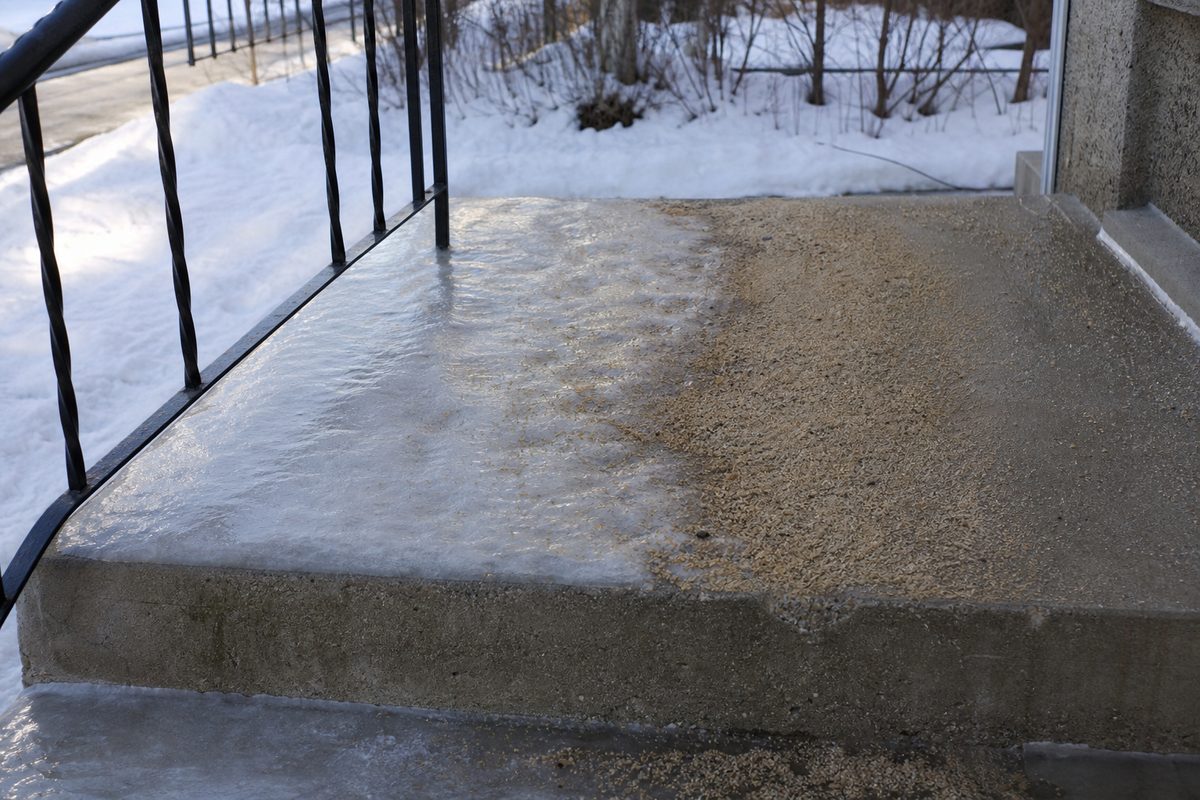
Winnipeg Residential Snow Removal spreads sand and salt on driveways, walks, steps and parking lots so that ice stops being the thing people slip on. The worst morning is not the one after the storm. It comes after a mild afternoon, when snow that was shovelled or driven over melts a little, and then freezes overnight into a glaze that looks like wet pavement.
Why does packed snow turn to ice after a thaw?
Snow that has been walked on or driven over is compressed into a dense layer that holds meltwater. In the afternoon sun it softens and the water spreads. When the temperature falls after dark, that water freezes into a thin, hard sheet over everything, including the places where the shovel never reached bare surface.
Winnipeg has many winters with this swing. Clearing the snow is half of the job, and the other half is the film left behind. A treated surface is the only reliable answer, because shovelling does not remove a bonded layer of ice.
Do we use sand, salt or both?
Salt melts ice and works well on a mild day. In deep cold it loses much of its power, and spreading it on a very cold morning mostly wastes it. Sand does not melt anything, but it sits in the ice and gives footing to boots and tires at any temperature.
Our approach is to match the material to the conditions on the day:
- Sand on steps, walks and slopes. Traction where people walk, and no residue that damages a surface.
- Salt on driveways and lots. Where the temperature is high enough for it to melt through and the surface can take it.
- A mix for the in-between days. Enough salt to start the melt and enough sand to keep footing while it works.
New concrete, stone steps and planted edges get extra care, since salt can mark and damage them.
Where does ice control matter most at a house?
Start with the places people put their weight on a slope or a single stair: the front steps, the walk from the driveway, the bottom of a ramp and the stretch where the downspout runs across the path. The driveway apron and the foot of the garage door follow, because meltwater runs there and freezes.
For older residents the steps and the walk are the whole concern. If a parent lives alone, ask us about a plan that treats the walk after every thaw, and see how that fits alongside our snow removal for seniors. Our walkway and step clearing page covers the clearing side of the same job.
What about condos, townhomes and commercial lots?
A lot with many users brings more liability and more surface, so ice control becomes a routine and not a reaction. Entrances, accessible ramps, mailbox clusters and the walk to the visitor stalls are the priority areas, and then the drive aisles.
Fort Garry is a good example. Waverley West has townhomes, condos, apartments and single-family homes in one new suburb, and the University of Manitoba campus sits in the middle of the district. Each of those property types has its own entrances and its own timing, so a treated route has to be planned around how the site is used. For larger properties, see our condo and apartment snow removal and commercial snow clearing pages.
When do we come?
On a plan, we treat after each thaw-freeze event and after snow has been cleared, without a call from you. Per-visit customers call or text and we put them on the route for that day. Timing matters, because spreading before the freeze keeps ice from bonding, and spreading after it breaks the bond that has already formed.
Add ice control to your winter
Ice control can be added to any seasonal snow removal contract or booked on its own. Tell us what needs treating, steps and walks, a driveway or a whole lot, and ask for a free quote.
What's Included
- Sand for traction on driveways, walks and steps
- Salt where the temperature lets it work
- Targeted spreading at entrances, ramps and slopes
- Residential properties, condo lots and commercial sites
- Added to a seasonal plan or booked for one visit
Other Services We Offer in Winnipeg
Sanding, Salting and Ice Control Questions
Do they salt the roads in Manitoba?
Road authorities treat the public streets they maintain, and what they use depends on the road and the temperature. Private driveways, walks, steps and parking lots are the owner's to treat, and that is the work we do.
Is sand or salt better for ice on my driveway?
It depends on the temperature. Salt melts ice but loses much of its effect in deep cold, while sand does not melt anything but gives grip at any temperature. In a Winnipeg winter we often use both, sand for traction and salt on the milder days.
Can salt damage my concrete or lawn?
It can, especially on new concrete and along grass and garden edges. We spread it sparingly and keep it off beds where we can. Sand is easier on surfaces, so it gets used where salt would do harm.
How much does ice control cost?
The price depends on the area to be treated, the material used and how often we visit. A single set of steps is a short job and a large lot is not. Our [cost guide](/blog/snow-removal-cost-winnipeg/) explains what drives the price.
Do you do sanding for businesses as well as homes?
Yes. We treat residential driveways and walks, condo and townhome lots, and commercial sites. For a larger lot we pair it with [parking lot plowing](/service/parking-lot-plowing/) so the surface is cleared first and treated after.
Get a Free Sanding, Salting and Ice Control Quote
Ask for a free quote for this winter. Tell us what needs clearing and we will tell you how we would handle it.